For years, the direction of K–12 education seemed obvious: more devices, more digital content, more online assignments, and more learning through screens.
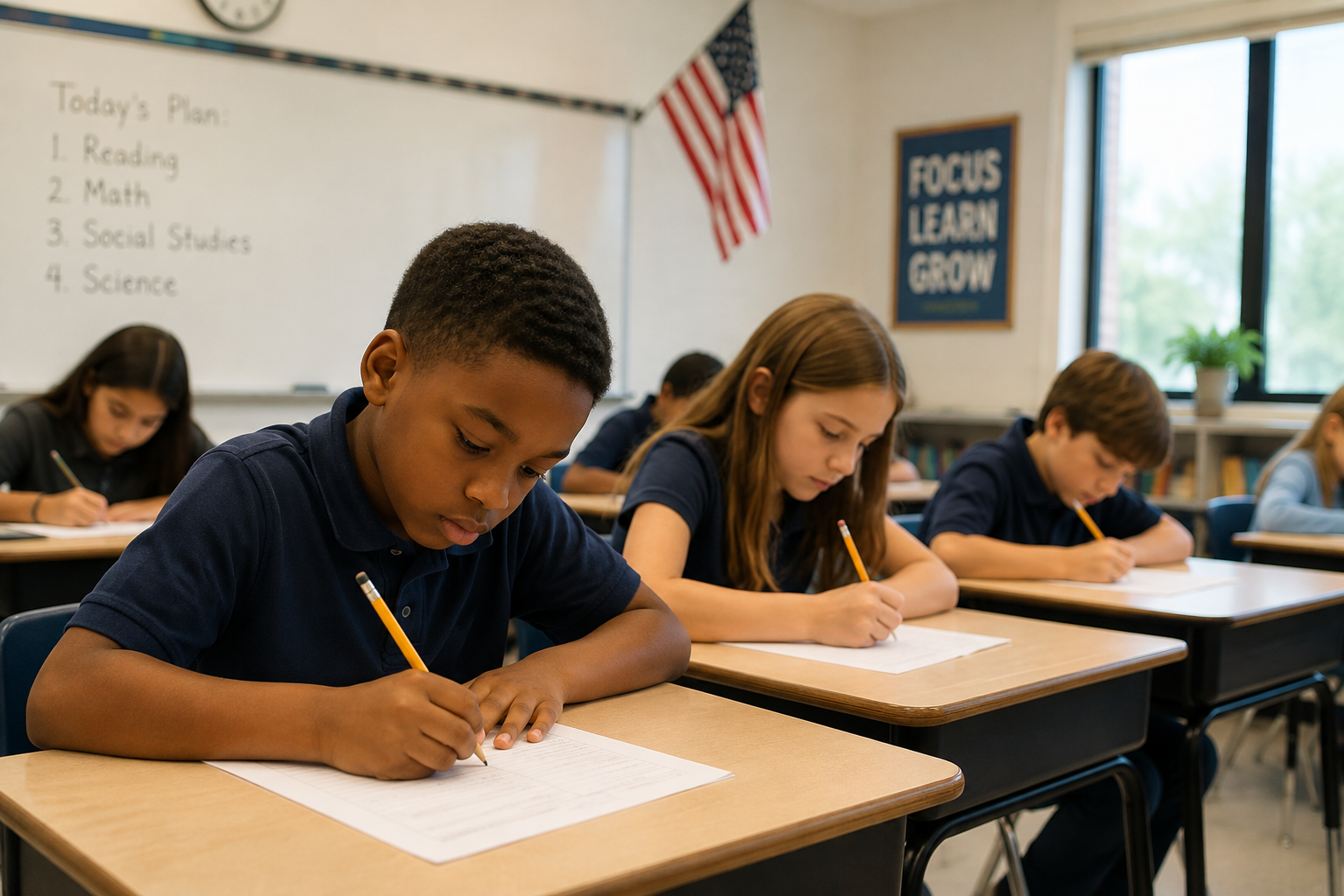
Now, something unexpected is happening. Some U.S. schools are deliberately bringing pen and paper back into classrooms. It would be easy to interpret this as a rejection of education technology. But that misses the bigger shift.
Schools aren't necessarily deciding that technology was a mistake. They are asking a more important question:
When does technology improve learning, and when does it get in the way?
That question could define the next chapter of K–12 education.
"Why Are Schools Going Back to Pen and Paper?"
Two forces are driving much of the conversation: concerns about attention and the emergence of AI-enabled cheating.
A 2025 study published in the "Journal of Clinical Medicine" found an association between higher daily screen exposure and poorer attention and working-memory performance among school-age children and adolescents. Importantly, the study does not prove that screen exposure directly causes these outcomes. It does, however, add to growing concern about how students use digital devices.
The second challenge is newer: generative AI.
Students can now use AI to generate essays, solve problems, summarize readings, write code, and complete other assignments. That creates a fundamental assessment question:
"How do educators know what a student actually understands when the submitted work may not have been produced independently?"
As a result, educators are reconsidering in-class writing, oral assessments, controlled testing environments, and other ways of verifying authentic understanding. Burke County Schools in North Carolina, for example, adopted a resolution encouraging pen and paper as the primary mode for note-taking, reading, writing, and assessment, while retaining technology where it provides clear instructional value. It is an important distinction: the policy is not simply "ban technology."
The shift is therefore less about going backwards than about becoming 'more intentional'.
Is Going Back to Paper the Right Direction?
Sometimes, but as a blanket strategy, probably not.
Paper can reduce digital distractions. In-class writing can give teachers a clearer view of a student's independent thinking. Oral assessments can reveal understanding that a generated written response may conceal.
But schools have also spent years building digital infrastructure.
A large share of classroom curricula now depends on online assignments and digital resources, making a complete reversal impractical for most districts.
The better question isn't
Paper or technology?
It is:
"What is the best medium for this learning objective?"
A student learning handwriting may benefit from a pencil.
A student defending an argument may benefit from an oral assessment.
A student taking a high-stakes test may need a controlled environment without outside assistance.
But a student exploring a scientific concept may benefit enormously from an interactive simulation.
The medium should serve the learning objective, not the other way around.
The Problem Isn't Screens. It's Unstructured Screen Use. This may be the most important distinction in the debate.
A screen is not an instructional strategy. Neither is paper.
It's all a medium. Their value depends on how intentionally they are used.
Research increasingly points toward the importance of purpose. Studies examining academic and recreational screen use have found different relationships with student outcomes, suggesting that what students are doing on a device matters, not simply how long they are using one.
That should change the conversation. Instead of simply asking, how many hours are students spending on screens?
Schools should also ask: What are students doing during those hours?
Are they creating or consuming? Practicing or scrolling? Thinking or outsourcing? Collaborating or simply completing?
Those questions provide much more useful information than screen time alone.
AI Should Make Learning More Visible, Not Less Human
There is an important lesson here for the education technology industry.
If AI becomes a shortcut for students primarily, educators will understandably push back. But AI can serve a very different purpose.
It can help teachers identify patterns in student performance, surface learning gaps earlier, reduce repetitive administrative work, support lesson planning, and help instructional leaders understand where additional support may be needed.
In other words:
AI should not make the student less visible to the teacher. It should make the student more visible.
That distinction matters.
At EDVES, this is the standard we believe education technology should meet.
We are not interested in adding screen time simply because technology exists. We believe technology should give educators better information, visibility, and better tools for making instructional decisions.
The goal isn't more automation but instructional excellence.
The Future of Assessment Will Be Blended by Design
The strongest response to AI-enabled cheating is probably not to abandon digital assessment altogether.
It is to rethink what assessment is supposed to prove.
A future-ready assessment model may combine digital tools for formative practice, feedback, research, simulations, and low-stakes assessment with authentic in-person opportunities to demonstrate independent understanding.
Students may be asked to:
- Write in class.
- Explain their reasoning verbally.
- Solve problems without external assistance.
- Defend a project.
- Apply knowledge to an unfamiliar situation.
- Complete selected assessments in controlled environments.
Meanwhile, technology can work behind the scenes, tracking patterns over time, identifying learning gaps, organizing evidence, and helping teachers intervene earlier.
That creates a more intelligent model:
Human-verified assessment + AI-assisted instructional insight.
The high-stakes moment stays human.
The ongoing visibility becomes data-informed.
What This Means for EdTech
The industry has spent years asking:
What can we digitize?
The better question now is
"What should we digitize and what should remain deliberately human?"
Not every worksheet needs to become an app.
Not every lesson needs to happen online.
And not every traditional practice needs to disappear simply because a digital alternative exists.
The best education technology should know the difference.
It should reduce the work technology is good at reducing. It should provide insights humans cannot easily generate at scale. And it should give teachers more time and attention for the work only teachers can do well.
That is the standard EdTech should be held to.
The Future Isn't Paper vs. Technology. It's Purpose.
The schools that navigate this transition well will not necessarily be those using the most technology or the least. They will be the ones who understand when technology creates value and when the best technology decision is to put the device down.
The return of pen and paper, then, is not necessarily a retreat from the future.
It may be a sign that education is becoming more deliberate about what that future should look like.
Sometimes better learning starts with a screen.
Sometimes it starts with a pencil.
The real intelligence is knowing the difference.
What do you think? Are schools moving away from technology or finally learning how to use it better?